The Story of my Wonderings
- Jun 19, 2019
- 4 min read
I have always loved language: metaphors, colloquialisms, accents, you name it. I spent my time growing up reading novels in languages I hadn’t learned yet, wondering over how they were spoken, used, and what they sounded like. It was a magical experience between the book and me. I tried to teach myself many languages to no real success because, now I know, I needed someone to speak it with. Though some can easily pick up a language with a couple of tapes and a general guidebook, most of us need exposure besides the intrinsic motivation and desire to learn a new language. However, I was used to traditional language methods and instruction: teacher is a native and fluent speaker who stands at the front of the classroom, focuses on grammar and word structures, and students get daily homework, quizzes, and exams. These methods had worked for me and even though I knew this is not the type of teacher I wanted to be, from the first moment I set foot in the classroom, it was hard to break out of the mold.
In my lower-level classes, grammar is assigned to each unit and even though the textbooks give a theme or country of focus, grammar ended up taking most of my time. Entire classes would go by and we wouldn’t do anything besides students taking notes and doing exercises, and me at the front either lecturing or answering question after question. I would be exhausted, confused, and self-aggravated at the thought that we would devote an hour and fifteen minutes of precious class time and students were still confused. Grammar was defeating me because I must not be teaching or explaining it right for us to spend a week longer than the other sections on the same subject.
It was only until the winter of the first year when we began our Methods class that I was finding about alternative ways to teach the most dreaded thing: grammar. I found TPRS where students figure out for themselves from a story how a grammar structure works. I found MovieTalk where short films are incorporated for students to increase their extemporaneous use of the grammar you’re learning. Most of all I was reminded – and it seemed I needed a big reminder – that the ultimate goal in a language classroom is to teach for communication. After all what good is knowing how a tense works if you can’t write well, speak well, and survive a day in a country that speaks that language.
It was during the Spring Term that I began to rearrange my lessons plans, not only making it a goal to spend less and less time on grammar, but keeping UbD in mind with my ultimate goal of teaching communication, not structures. With more free time not spent on grammar, I was no longer behind (an accomplishment for me!) and we got to spend more time learning about the culture, talking more, listening more, and even discussing things outside of our class scope like a current event or a new school rule (a thing I had thought in September would never be possible for me with time always running out).
The other major factor that led both me and my students thrive a lot more in the Winter and Spring terms than in the fall, was projects! Without me even realizing it, it also forced me to stop teaching grammar and allow my students to use trial-and-error, to self-pace their work and learning, and above all for them to take ownership of their learning without me.
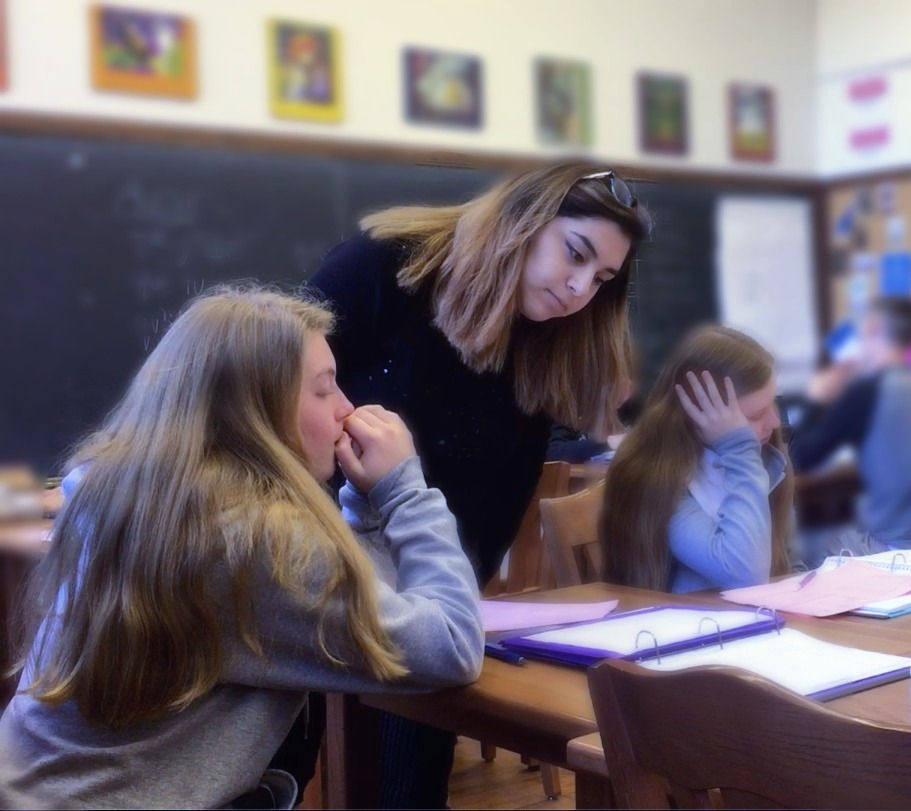
There was this moment in the winter where I had students map out with an organizational chart what they felt was important to know about France’s role in WWII. They could use any symbols they liked, any pictures, colors, maps, as long as everything was connected and relevant to our study of the topic at hand. I remember watching in awe at the relatively silent class I had all year finally began to speak!
Partners asked each other – negotiating the meaning, as us language teachers would say – whether or not an event belonged in their timeline, or if the person had been a collaborator or resistor in wartime. I was so amazed that I was not being bogged down by a million questions, usually all the same, about words they didn’t know or going over things we had already earned in the fall.
They forgot about perfection in their writing and grammar; instead, they were solely focusing on the learning and enjoying it!
The moment felt so magical that I recorded them working, taking up space in the classroom, going on the floor, posting up sticky notes on the chalkboards, all without me saying a thing. I knew then and there I needed to figure out ways to bring up that magic again as much as possible. Then in the spring I watched many inquiry presentations regarding PBL and how it had helped students take ownership and work collaboratively for deeper understanding. This helped solidify that I could implement more projects into my curricula next year. I will give them more opportunities to work collaboratively, to express their learning in different ways, and to present in front of each other and me, more comfortably and confidently. And hopefully this leads to them learning to communicate better overall.
For information on a PBL project I did this year with my Spanish II class, visit my "Feedback & Assessment" tab under the "Teaching & Learning" strand up top.

Comments